Dewar's Aberfeldy
In our first of a series of blogs on distilleries and their whisky, Richard Woodard (ex-Contributing Editor of Scotchwhisky.com) looks at the Aberfeldy Distillery in Perthshire.
Find out more about Aberfeldy and book a distillery tour direct from their dedicated page.
As the 19th century drew to a close, the whisky blending and bottling business of John Dewar & Sons was thriving as never before. Thanks to the foresight of founder John Dewar, and the dynamic partnership of his sons, John Alexander and Tommy, Dewar’s blended Scotch was the favoured dram of the fashionable the world over, and especially in the United States. The family had secured a Royal Warrant from Queen Victoria, and the future King Edward VII was counted as a personal friend.
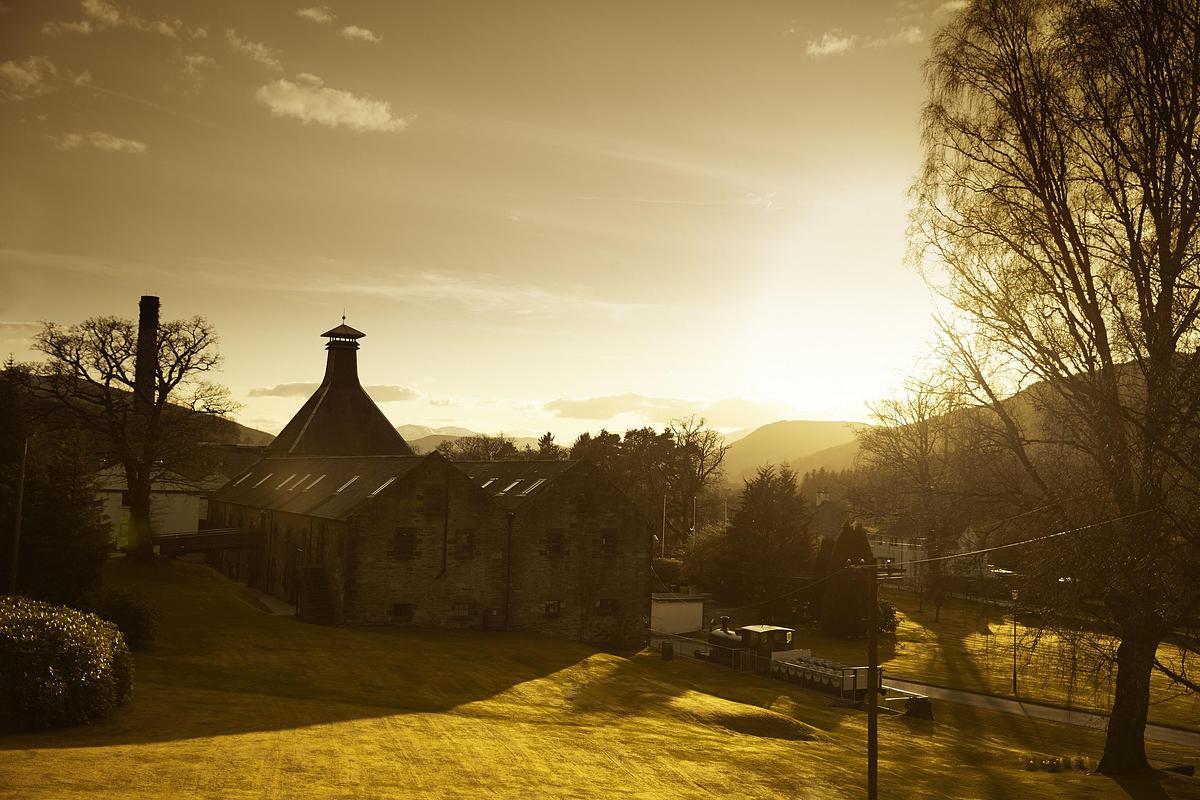
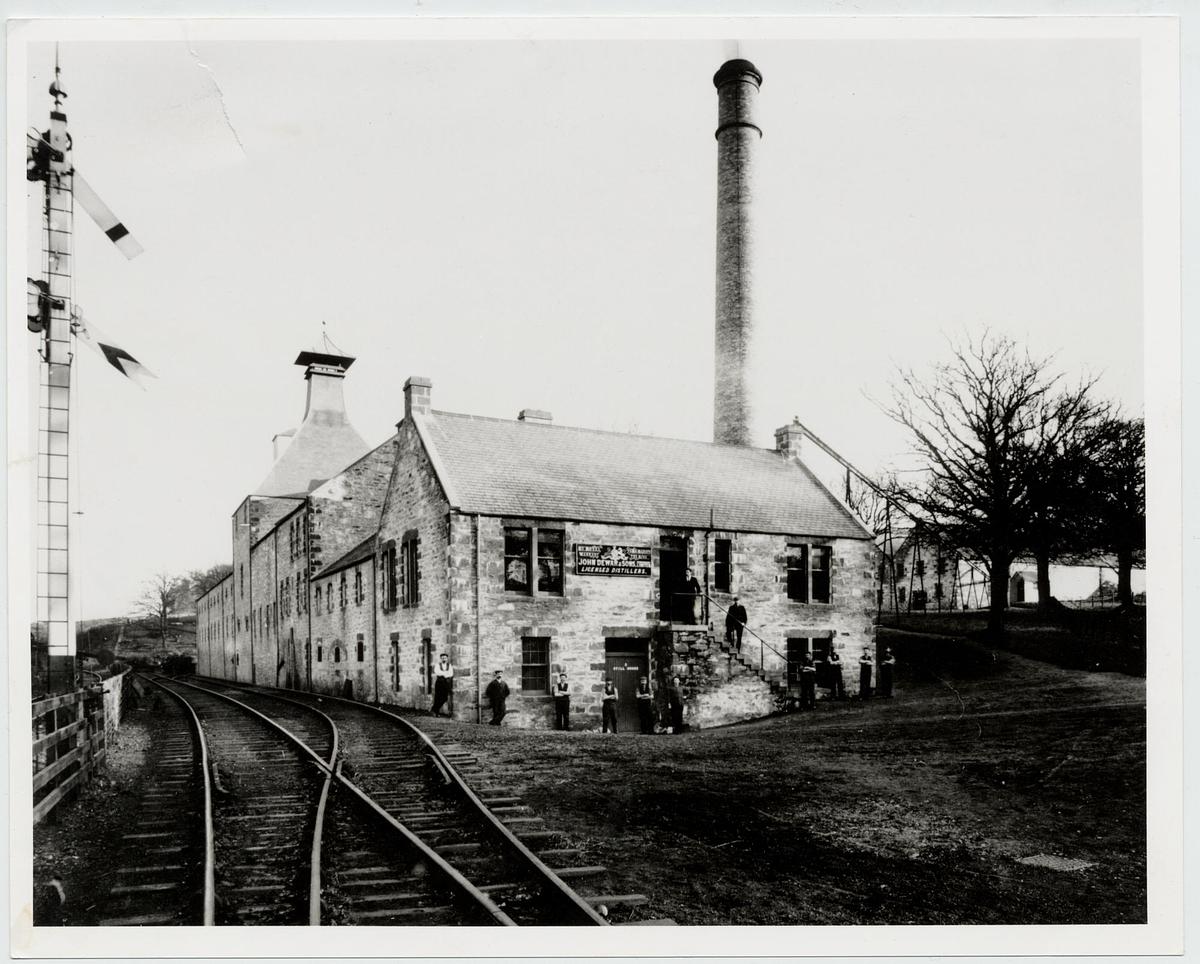
With demand booming, the brothers needed to secure a consistent supply of malt whisky to continue to grow the business – and so, in common with many of their colleagues in the industry, they decided to build their own distillery. Aberfeldy, which began production in 1898, was the result.
At first glance, the rolling countryside of Highland Perthshire seems an unlikely location to choose for a new distillery, compared to, say, Speyside, which was then and still remains the heartland of malt whisky production.
But Aberfeldy fitted the bill for a number of reasons and – before his death in 1880 – the elder John Dewar had pinpointed it as an ideal spot to make whisky. For a start, there was a good water source, the Pitilie Burn, known for its alluvial gold deposits as it flowed down into the mighty River Tay.
Then there was the railway. A branch line linked the market town of Aberfeldy with the city of Perth, where John Dewar had established his shop, at 111 High Street, in 1846. Until road took the place of rail and the line closed in 1965, the Aberfeldy distillery’s own sidings brought raw materials in, and took whisky out.
The Dewars already operated another distillery, Tullymet, at Auchnagie some 12 miles away, so there were practical reasons for choosing Aberfeldy: this was very much a Perthshire business, for all its global ambition.
And emotion no doubt played its part too, since John Dewar had been born in 1805 in a humble croft in the evocatively named nearby village of Dull (which has since become twinned with Boring, Oregon, and also has links with Bland, New South Wales). The whole area was family ground.
From the outset, the Dewar brothers knew exactly what they wanted from Aberfeldy in flavour terms. ‘Even when they designed the building, we know that they were looking for something light, sweet and easy-drinking,’ explains Matthew Cordiner, Dewar’s Aberfeldy brand ambassador. ‘Aberfeldy was the heart and the base of the Dewar’s blend.’
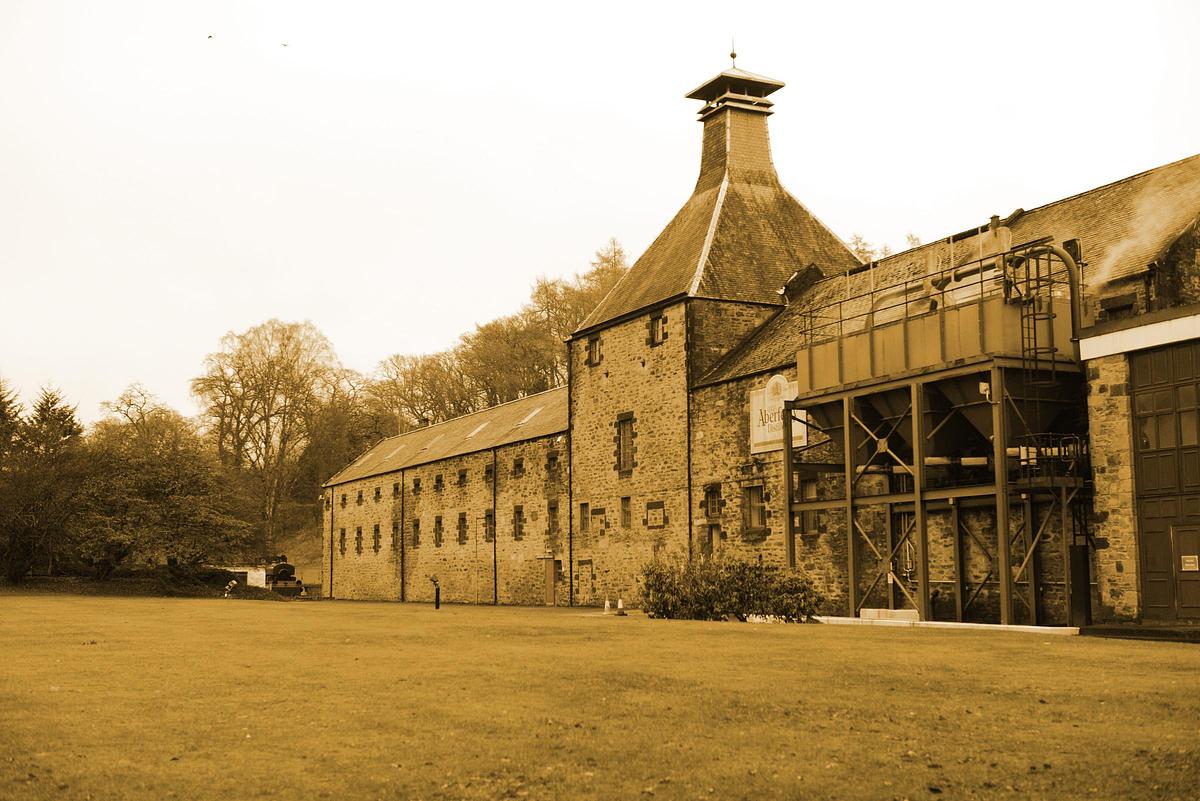
From the outside, Aberfeldy has the classical look of a malt whisky distillery, with its stone walls and Doig Ventilator – the pagoda-style kiln chimney head that takes its name from Aberfeldy’s architect, Charles Doig.
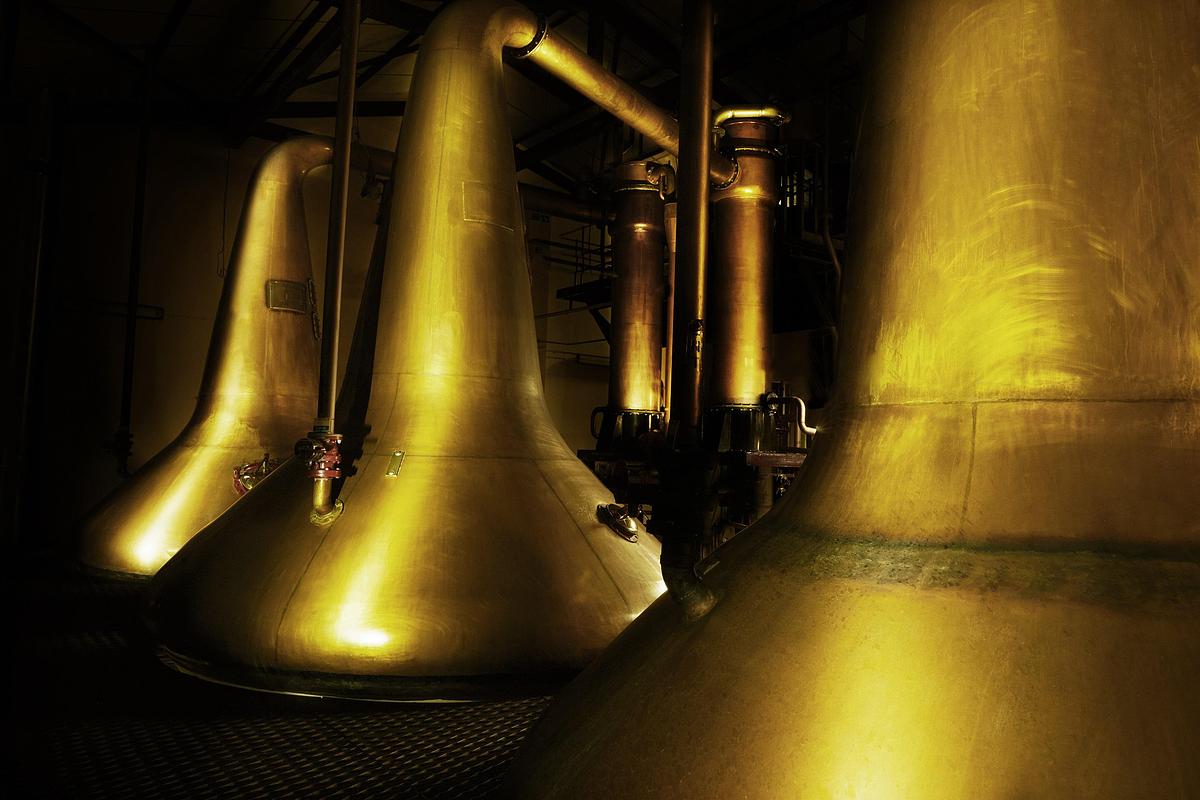
Inside, everything is run to accentuate the honeyed, fruity sweetness for which Aberfeldy is famed. Ferments are on the long side – about 72 hours on average – and the two pairs of distinctive, onion-shaped stills are run gently to bring plenty of copper contact, which helps to clean and refine the spirit.
For about the first 75 years of its existence, Aberfeldy had its own maltings and would have used peat in the kilning process – but, says Cordiner, this was dictated by necessity rather than any wish to make a smoky whisky. ‘The emphasis was always on a spirit that was relatively light in character, with honeyed sweetness,’ he says.
That distinctive character lends itself to maturation in American oak casks, with Aberfeldy’s signature flavours of heather honey and soft, sweet fruit the perfect match for the vanilla notes typically given by wood previously used to age Bourbon and other American whiskies. But ex-Sherry casks are also used, and Aberfeldy malt master Stephanie Macleod is now taking things in a more experimental direction, exploring the impact of more unusual cask types on the Aberfeldy spirit.
In 1972, as Dewar’s sales rose again, Aberfeldy expanded and its maltings, unable to meet the distillery’s increased demands for malted barley, were closed – and now house Aberfeldy’s Whisky Lounge and Café.
The old maltings are one part of the attractions offered to visitors to Aberfeldy today, with various distillery tours available all year round. Cordiner is a particular fan of the Cask Tasting Tour, which includes the opportunity to try whisky samples drawn from a cask specially chosen by Aberfeldy malt master Stephanie Macleod – at the time of writing, a 1999 Sherry cask.
‘We recommend that people allow about one-and-a-half hours for the standard tour, but allow way more time if you’re into history like me, because our museum, I think, is fantastic,’ Cordiner adds, recalling his first visit (prior to working at the distillery) when he intended to ‘just pop in’ while driving south from Speyside.
‘Four hours later I was still there. I’ve never seen an archive like it that the public can go into, with such a depth of information.’ Interactive iPads use a special app to offer additional insight: hover the iPad over an item and it will relay a host of information about its historical significance.
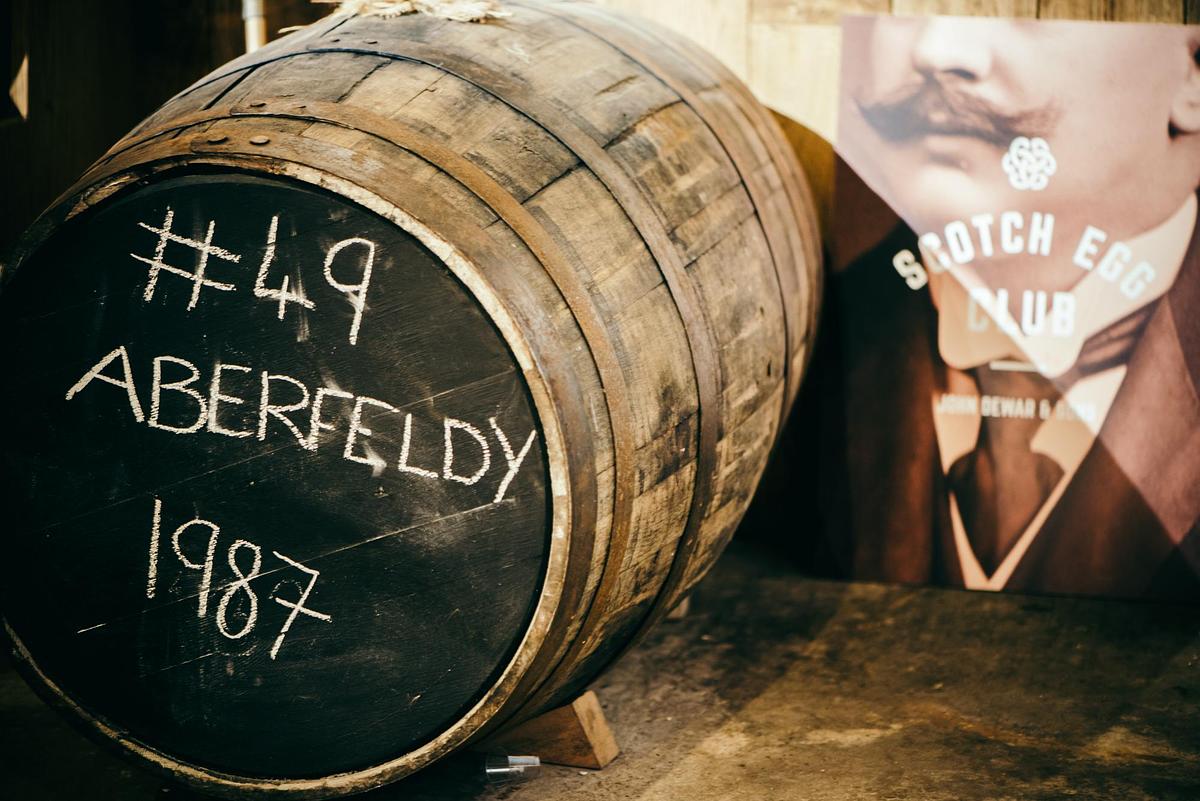
As well as trying and buying the core Aberfeldy range of single malts (currently comprising 12-, 16- and 21-year-old expressions), visitors can also purchase their own self-filled bottles of Aberfeldy single malt from casks on display in the visitor centre and warehouse.
Usually these will include an ex-Bourbon and an ex-Sherry cask, but at the time of writing there is a very special hand-bottled exclusive on offer: Aberfeldy 40 Years Old, in three ex-Bourbon hogsheads that were filled on 22 August 1978.
The oldest release yet from the distillery is priced at £2,500 a bottle – the ultimate souvenir from a distillery that was born in the age of blends, but is now embracing the modern whisky world’s growing love for single malt.
Four Aberfeldy single malts to try…
Aberfeldy 12 Years Old (40%): Gentle, harmonious combination of floral honey, citrus and green apple, with background notes of cereal and oak shavings.
Aberfeldy 16 Years Old (40%): This is warmer, thicker and more densely packed: fruit loaf, golden syrup and a savoury influence from excellent Sherry casks.
Aberfeldy Exceptional Cask 1998 (20 Years Old; Cask #119; 54.1%): Unctuous, decadent and hugely sweet, with dark honey, fruit coulis and light spice. Darker, more brooding flavours lurk in the shadows.
Aberfeldy 40 Years Old (1978; Cask #5029; 50.1%): Immediately, the unmistakable stamp of long ageing and relaxed maturity. The pleasingly sour note known as rancio, more of that heather honey and creamy lemon meringue. Surprisingly fruity. Sublime.